Embedded in the Kathmandu Valley in Nepal, the Darbar Square in Patan, since 1979 UNESCO World Heritage site, is renowned for the unique brick, timber, and stone architecture and its highly developed craftsmanship. Its historic setting, comprising pagoda and sikhara-style temples and the Royal Palace, dating from the 16th to the 18th century, is still widely preserved. For these reasons the complex has been subject of ongoing architectural and art historical research. At the same time scientific research into conservation issues, with the aim of clarifying sources and mechanisms of decay and advancing conservation practice, was so far rather neglected; although the architectural legacy has been constantly threaten by earthquakes (e.g. the recent great earthquake 2015), challenging climatic conditions, inappropriate interventions, neglect, and urban development.
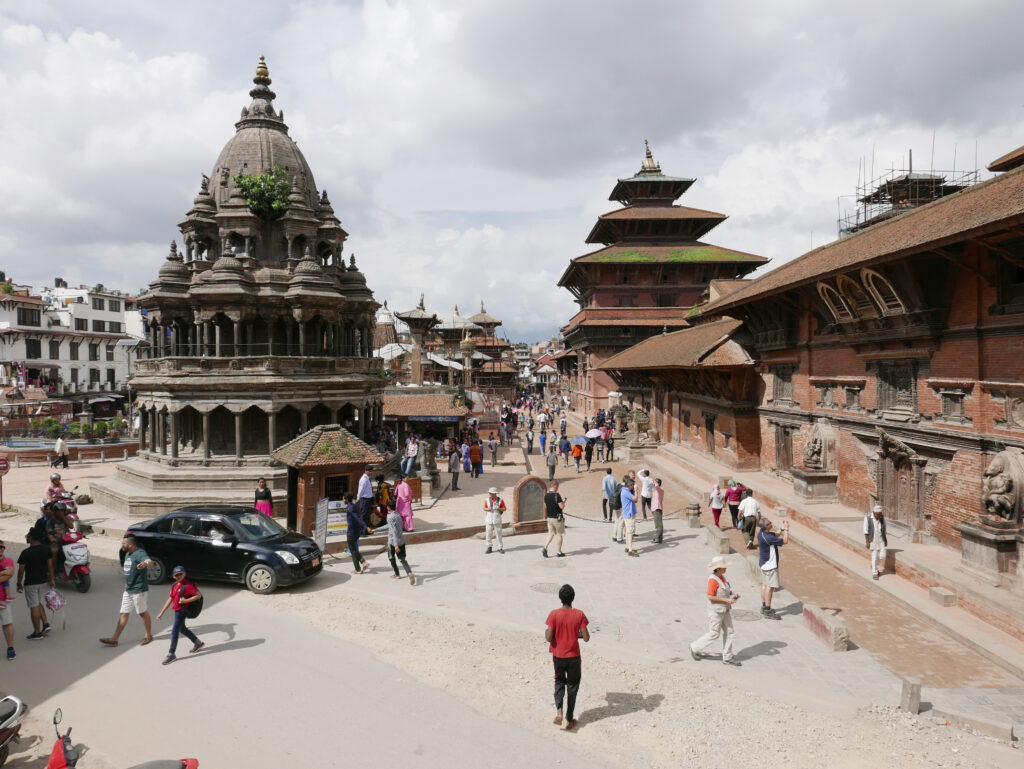
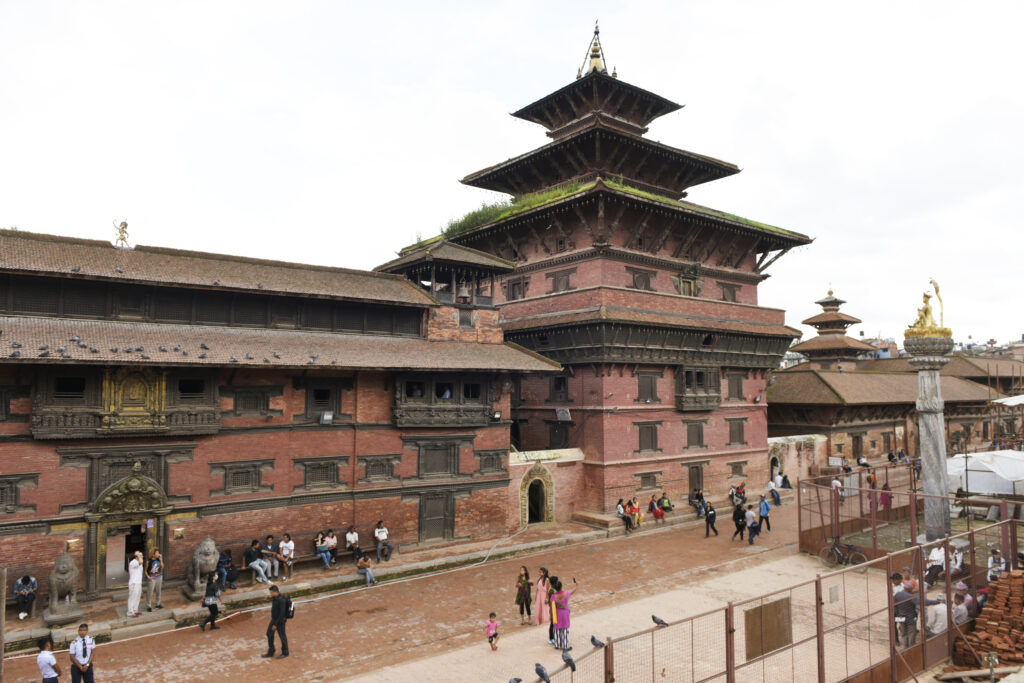
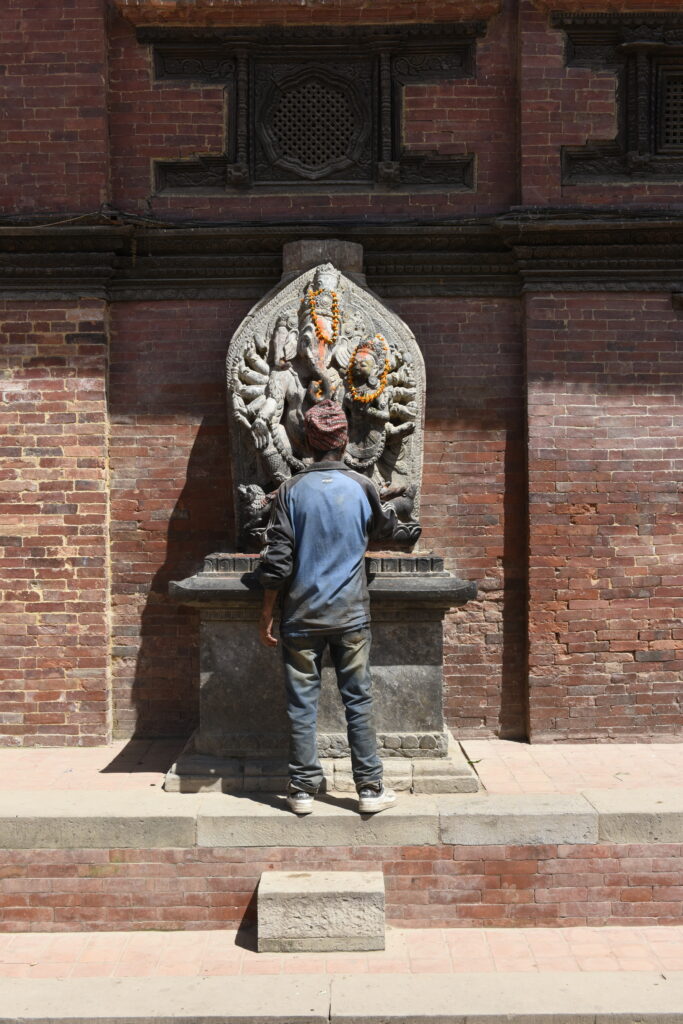
Worship of sculptures and idols throughout the year
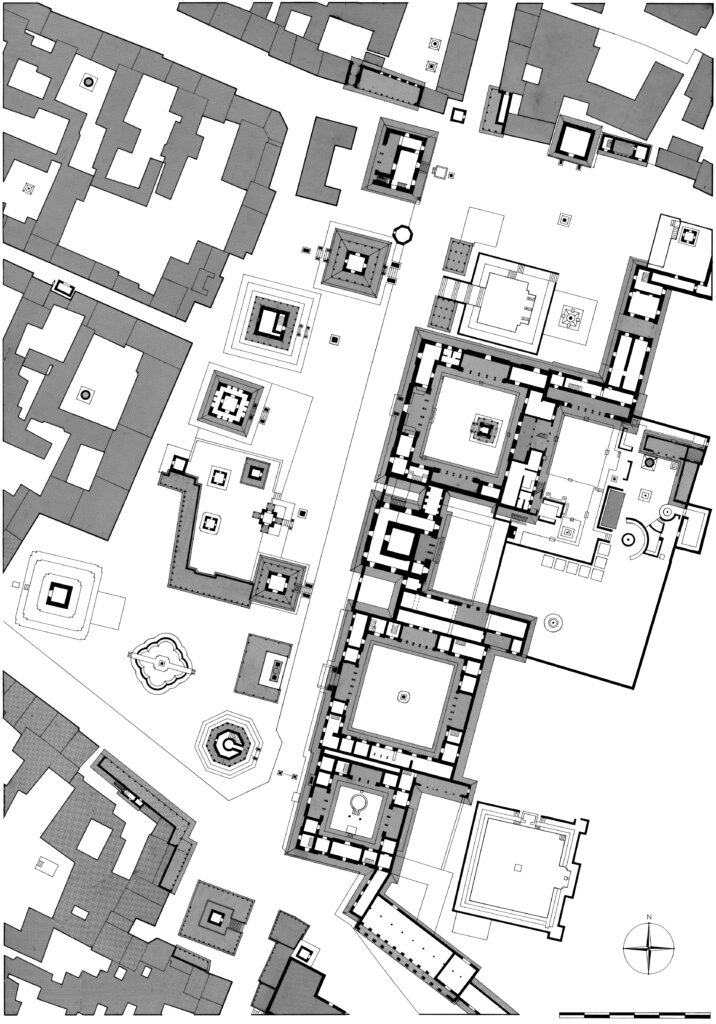
Site plan depicting the numerous monuments on the Durbar Square (left) and the Royal Palace with its courtyards and the adjacent garden (right)
Therefore, the aim of this project is to examine the conservation culture in Patan and to study the potential of conservation practices in the Nepalese context. Which conservation practices slow down deterioration effectively, reduce vulnerabilities and hazards, mitigate risks, and increase resilience? How can their suitability, compatibility, and sustainability be evaluated? What synergies can be created between traditional knowledge and modern practices?
Our objectives are
- to review the conservation history, philosopy and actors behind
- to examine decay and deterioration processes of the local building materials – stone, brick, mortars and metal – the monuments’ vulnerabilitites and the risks the heritage site is exposed to
- to study and assess historic (traditional) and current conservation materials and practices in the Nepali context
- to reveal new insights in traditional (historic) conservation practices in Nepal
To meet these research objectives, a systematic approach is undertaken comprising archival research, literature survey and interviews as well as extensive fieldwork followed by laboratory investigations. Methods and tools from the fields of heritage science, conservation science, natural science, and social science are used. The research is largely object-based, whereby selected monuments on the Durbar Square are examined.
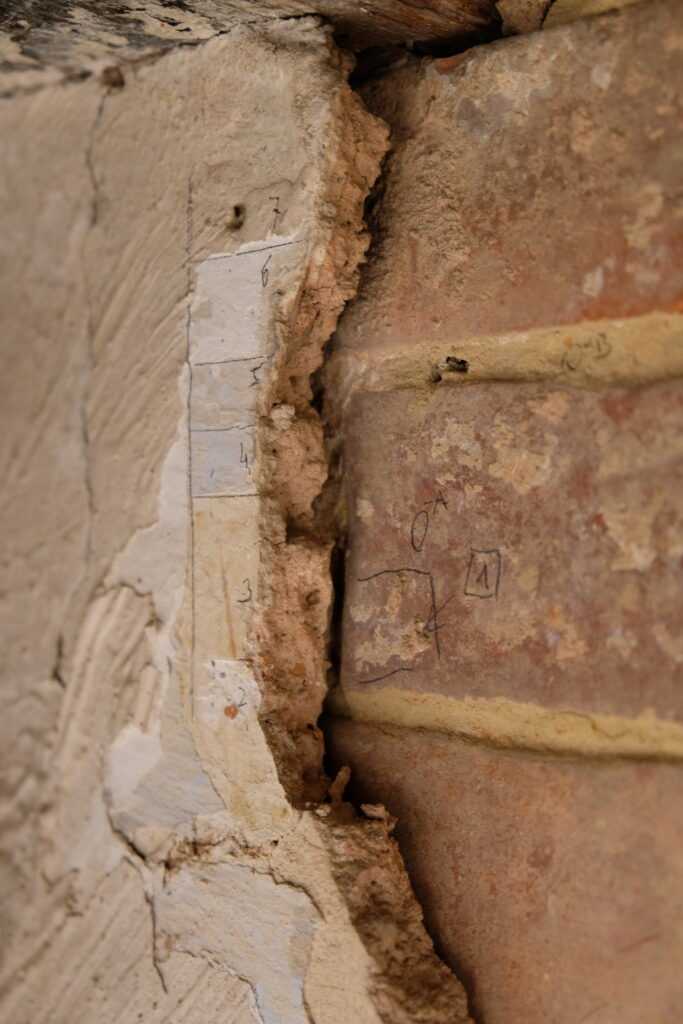
Stratigraphy of renders and coatings
Sampling on site
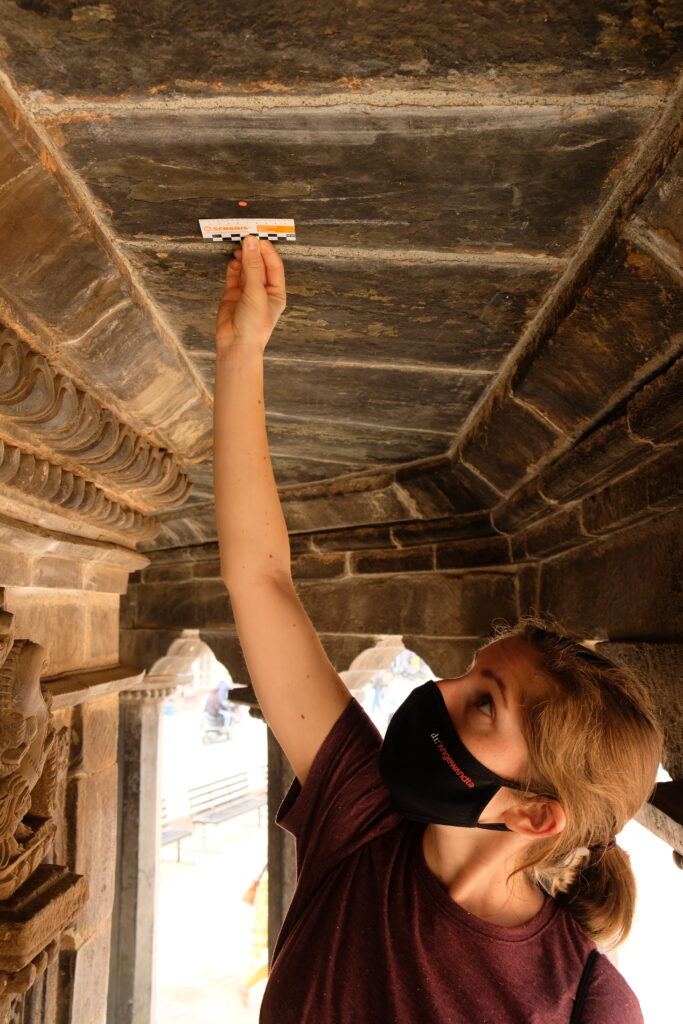
The project benefits from the qualified Austrian-Nepalese core research team comprising senior and pre-doc scientists both from the Institute of Conservation, University of Applied Arts Vienna, and the Kathmandu Valley Preservation Trust. Their long-term practical work experience on site and established networks of international researchers are of additional value.